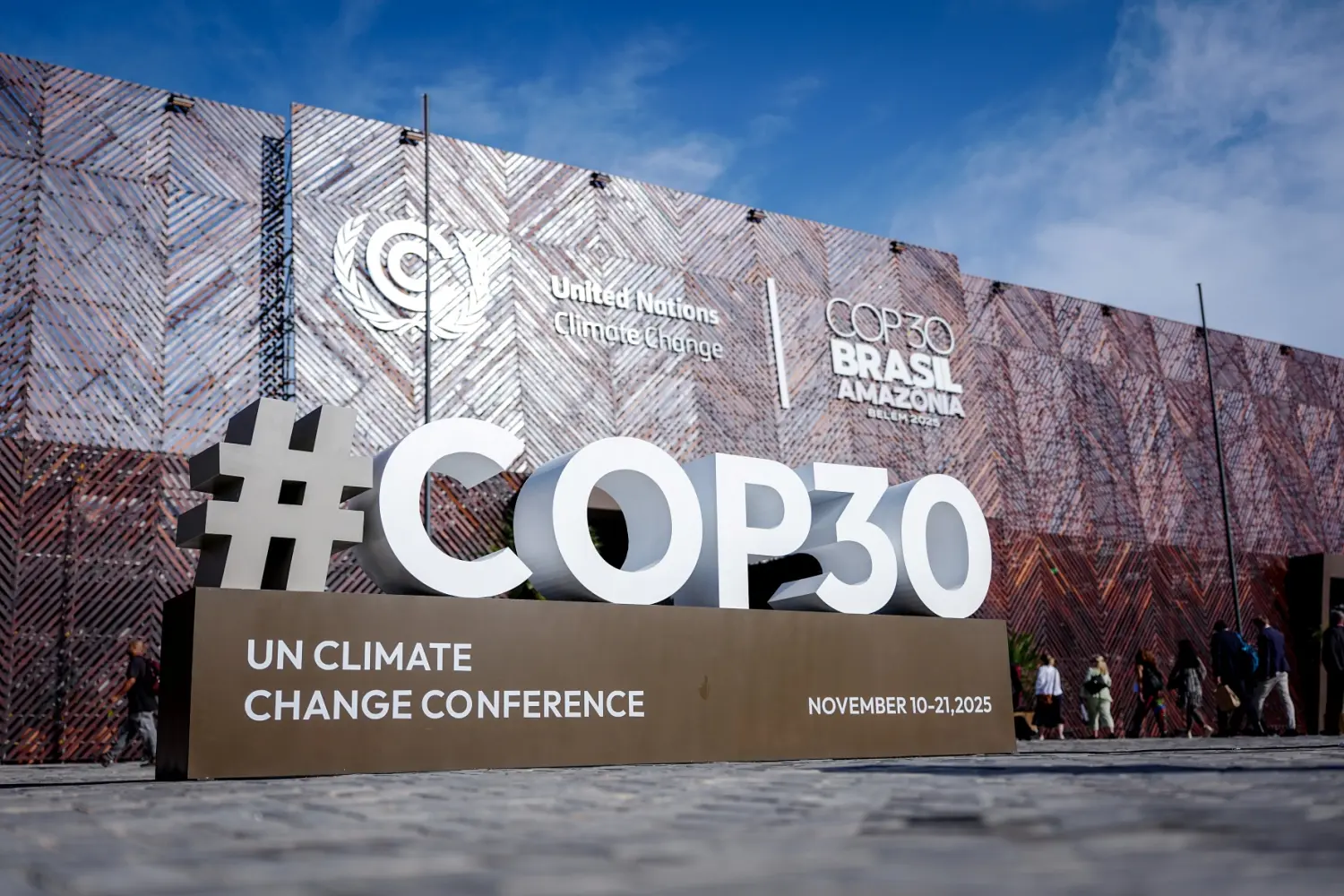
Every November, around fifty thousand diplomats, negotiators, lobbyists, activists, and journalists descend on a city that is not entirely prepared for them, spend two weeks arguing about the future of the planet, and produce a document that almost nobody reads but that quietly reshapes how businesses operate for years afterwards.
This year, that city is Belém, in the Brazilian Amazon. COP30 — the thirtieth Conference of the Parties under the UNFCCC — runs from 10th to 21st November 2025. The location is pointed: putting the Amazon at the centre of climate talks is the diplomatic equivalent of holding an obesity conference in a sweet shop. It makes the stakes harder to ignore.
The choice of Belém has also been controversial, which is on brand for COP host city announcements. The city doesn't have the hotel capacity, the transport infrastructure, or — according to environmentalists — the road network to handle the influx without damaging the very ecosystem the conference is supposed to protect. New roads are being cut through protected rainforest to accommodate delegates who are flying in to discuss how to protect rainforests. Nobody involved appears to find this ironic, or at least nobody is admitting to it publicly.
But the logistics are someone else's problem. What matters for UK businesses is what comes out of the talks — and this year, there are three areas worth paying attention to.
The UK just committed to an 81% cut. That affects you.
Governments were supposed to submit their updated national climate plans — Nationally Determined Contributions, in the jargon — in early 2025. Most of them missed the deadline, because this is the UN and deadlines are decorative. At the time of writing, roughly a quarter of countries had actually submitted.
The UK, to its credit, was among them. The new NDC commits to reducing all greenhouse gas emissions by 81% by 2035, compared to 1990 levels. That's a significant step up from previous targets, and it will ripple outward through the economy in ways that won't be immediately obvious but will eventually be impossible to miss.
What this means in practice: stricter rules on energy efficiency, waste, and emissions reporting. More scrutiny from regulators and investors. Greater pressure to publish credible, substantiated climate strategies rather than vague commitments involving the word "journey." The Department for Business and Trade has already been consulting on new UK Sustainability Reporting Standards, which is the bureaucratic equivalent of measuring you for a suit you haven't agreed to wear yet.
The businesses that come out of this well will be the ones that are already measuring, already reducing, and already reporting — rather than the ones scrambling to figure out their Scope 2 emissions at the last minute. Proactive decarbonisation is starting to carry tangible commercial advantages: lower insurance premiums, favourable financing terms, and the kind of procurement credibility that a PDF with "Net Zero Strategy" in the title alone won't provide.
Carbon markets are getting real. Finally.
At COP29 in Azerbaijan last year, there was considerable excitement about the finalisation of rules for Article 6 of the Paris Agreement. Article 6 governs how countries can use carbon markets — trading emissions reductions between nations — to meet their climate goals. The rules had been in negotiation since 2015. Ten years to agree on a framework for something the planet needs urgently. Efficient.
Still, we now have it. And it matters because Article 6 is reshaping not just how carbon markets work, but how seriously the credits within them need to be taken. The days of purchasing cheap, questionable offsets from a project that may or may not be planting trees in a place that may or may not have been deforested in the first place — those days are winding down.
Under the new framework, carbon credits need to be verifiably robust, linked to real climate benefits, and not double-counted by both the buying company and the selling country. That last point — "corresponding adjustments," in the terminology — is the one most businesses haven't thought about yet, and it's going to matter.
Over a hundred countries have indicated they want to participate in Article 6 markets. Investor enthusiasm is high. But actual readiness is low. Very few countries have taken the practical steps needed to get their systems running. This creates an interesting window: demand for high-quality credits is growing, supply infrastructure is lagging, and the price trajectory for credible offsets between now and 2030 is pointing firmly upward.
For businesses that rely on carbon credits as part of their strategy — whether for voluntary offsetting or compliance — the message is straightforward. Buy quality. Buy verified. And don't assume today's prices are tomorrow's prices.
The $125 billion question about forests
The first COP ever held in the Amazon was always going to put forests front and centre. Brazil's headline proposal is the Tropical Forests Forever Facility — a $125 billion scheme that uses blended finance to reward countries for keeping their forests standing and penalise them for cutting them down.
The mechanics are relatively simple. Countries with intact tropical forest would receive $4 per hectare per year. Lose a hectare, and you take a proportional deduction from the total. Twenty percent of all payments would be directed to Indigenous Peoples and local communities, which is notable because it's a specific, published figure rather than a vague commitment to "stakeholder inclusion."
The proposal is well-developed. It was discussed at the COP16 biodiversity summit in Colombia last year, and the concept notes include actual numbers — always a good sign that something might happen, as opposed to the more common COP output of agreed-upon principles with no figures attached.
The catch — and there is always a catch — is how this interacts with existing carbon credit schemes. REDD+ projects, which generate carbon credits by protecting forests from deforestation, depend on the concept of "additionality." The credit has value because without it, the forest would have been cut down. If a $125 billion international fund is already paying countries to keep those same forests standing, the additionality argument for REDD+ credits in those regions gets harder to make.
The TFFF's own documentation stresses that the scheme is designed to supplement REDD+, not replace it. How that plays out in practice — particularly in terms of credit pricing and verification — is something to watch. Businesses currently holding or purchasing forest-based carbon credits should keep an eye on how this develops. It's not a reason to panic. It is a reason to stay informed.
What to actually do with this information
COP negotiations produce slow-moving consequences. Nothing that happens in Belém in November will change your compliance obligations the following Monday. But the direction is clear, and it has been for several years now: standards are tightening, reporting is becoming mandatory rather than optional, carbon credit quality is being scrutinised more aggressively, and the gap between genuine climate action and performative gestures is getting easier to spot.
The practical takeaway is unglamorous but useful. Measure your footprint now, while it's still voluntary for most SMEs. Start reducing before you're required to. If you're offsetting, make sure your credits are verified under recognised standards — VCS, Gold Standard, Woodland Carbon Code — because the era of "we planted some trees, trust us" is ending.
COP30 won't produce a single document that transforms how you run your business. It will, however, produce several documents that make it slightly harder to pretend that climate risk is someone else's problem. And "slightly harder" has a way of compounding, year after year, until one day it's simply how things work.